Dental technology · King of Prussia, Greater Philadelphia

Dental Technology at All On Smiles

A considered smile starts with a clear plan. At All On Smiles, digital tools and in-house design help us connect the details of your care—from your first assessment to the shape and fit of your restorations.

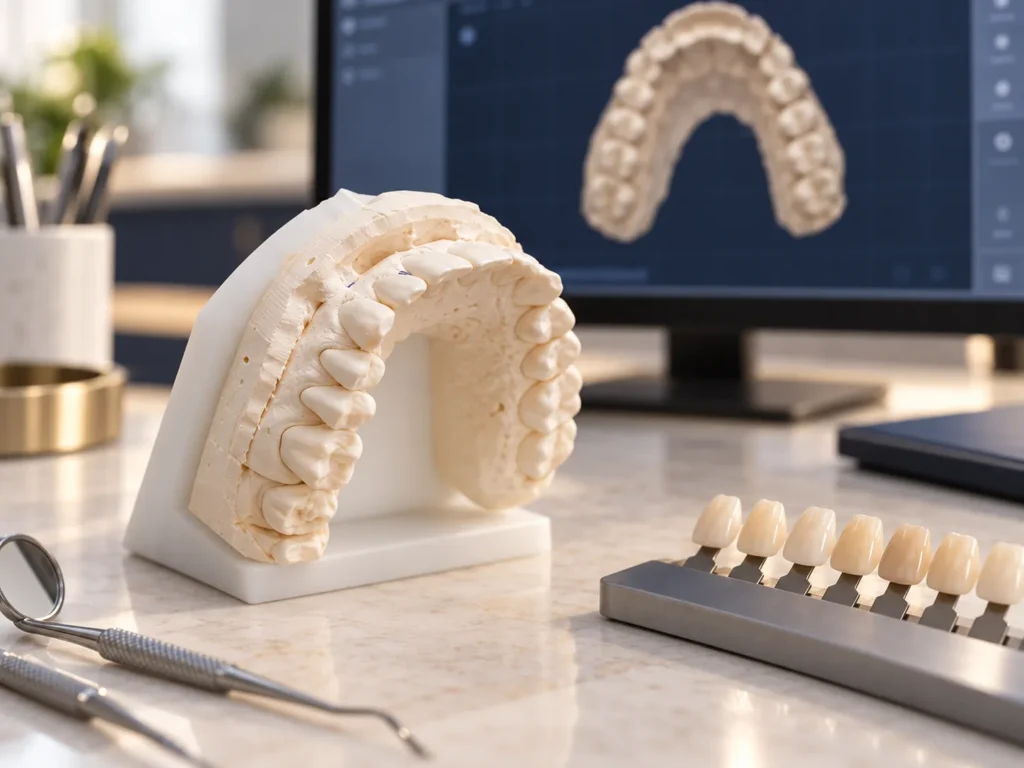
Illustration of a dental planning workspace with a tooth model and digital design screen.

Every detail has a purpose.

  1. Understand

    Start with your goals and a careful assessment. Photographs, scans or imaging help answer the questions relevant to your care.

  2. Design

    Bring appearance, fit and function into one plan. Discuss the details and understand the proposed treatment before moving ahead.

  3. Create and refine

    Connect digital planning with fabrication and clinical checks, refining the work around the needs of your smile.

The tools behind a thoughtful smile.

Each technology has a particular role. Explore how our tools support planning, communication and treatment, and where they may fit into your care.

In-house smile design

Shape, shade and proportion considered together, with a design team close to your care.

A smile is more than a row of individual teeth. Our in-house design process brings your preferences into the conversation alongside the shape, shade and proportions of proposed restorations.

Keeping design and clinical planning connected makes it easier to discuss details and refine the proposed result. Your dentist will explain the previews, models or try-ins that are appropriate for your plan.
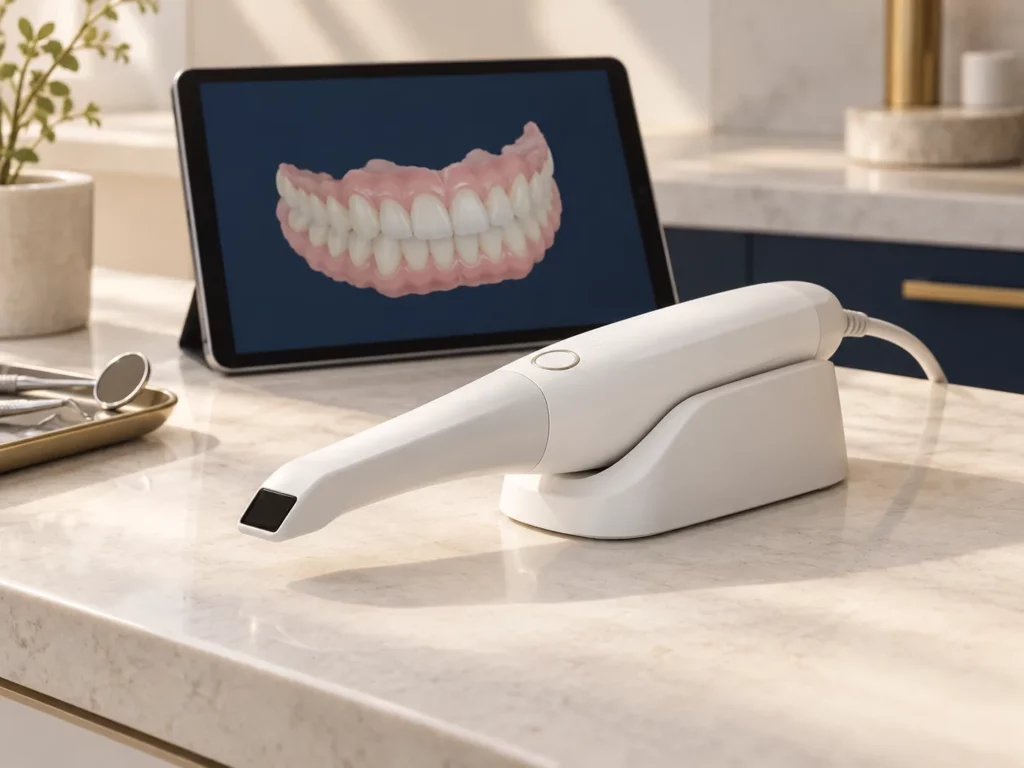
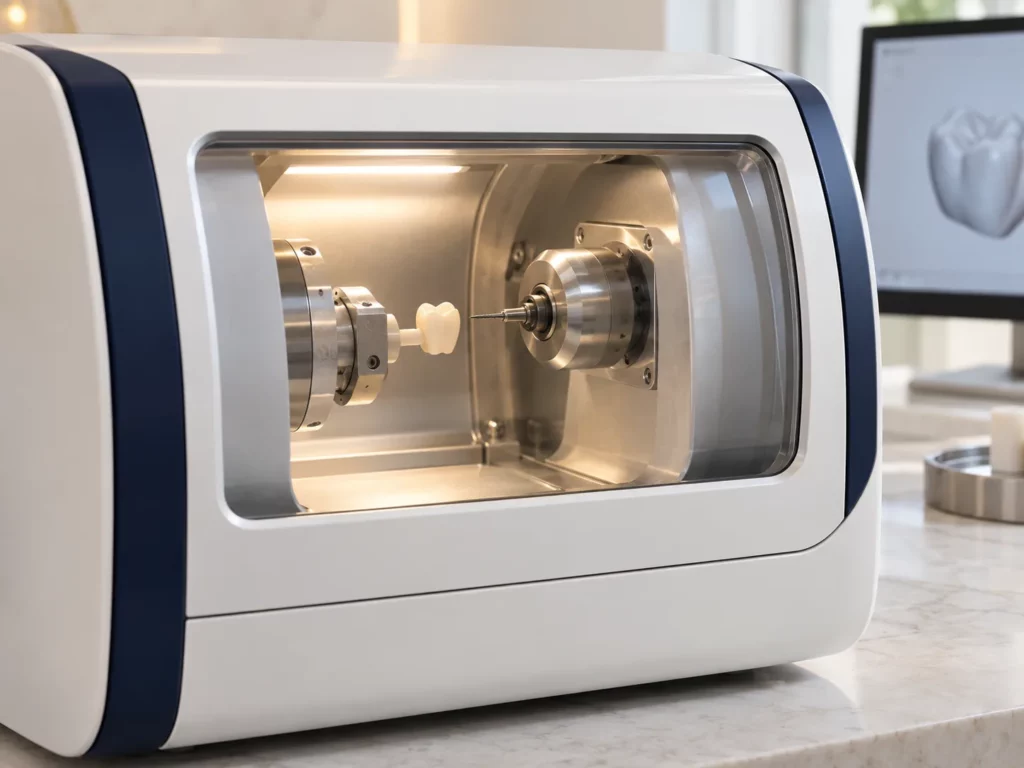
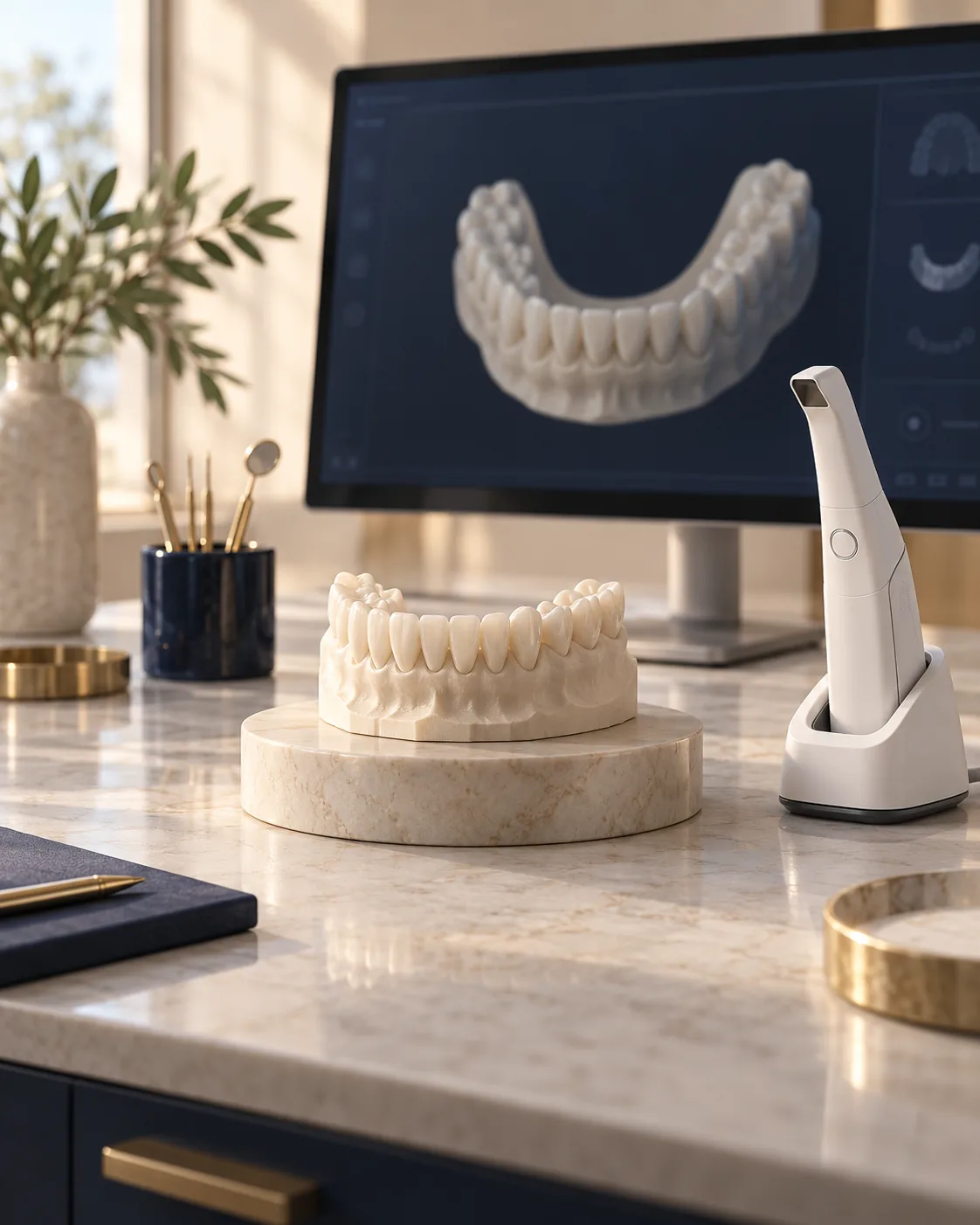
Illustration of an optical intraoral scanner beside a digital dental model.

Intraoral scanners

Digital impressions that help connect the details of your teeth to the next stage of treatment.

A handheld optical scanner records the surfaces of your teeth and gums to build a digital model. That model can support the planning of aligners or the design of a restoration, depending on the treatment.

Digital scanning can reduce the need for traditional impression trays in suitable cases. It does not use X-rays and does not replace imaging needed to assess structures below the surface.

Illustration of a dental milling unit shaping a ceramic restoration.

CAD/CAM

Digital design and manufacturing for restorations planned around your smile and bite.

Computer-aided design gives the team a way to work on a restoration’s shape and fit using a digital model. Computer-aided manufacturing then translates the design into a fabrication process, such as milling.

These tools support selected crowns, veneers, bridges and inlays, as well as implant restorations. The material, manufacturing method and appointment schedule depend on your particular treatment.

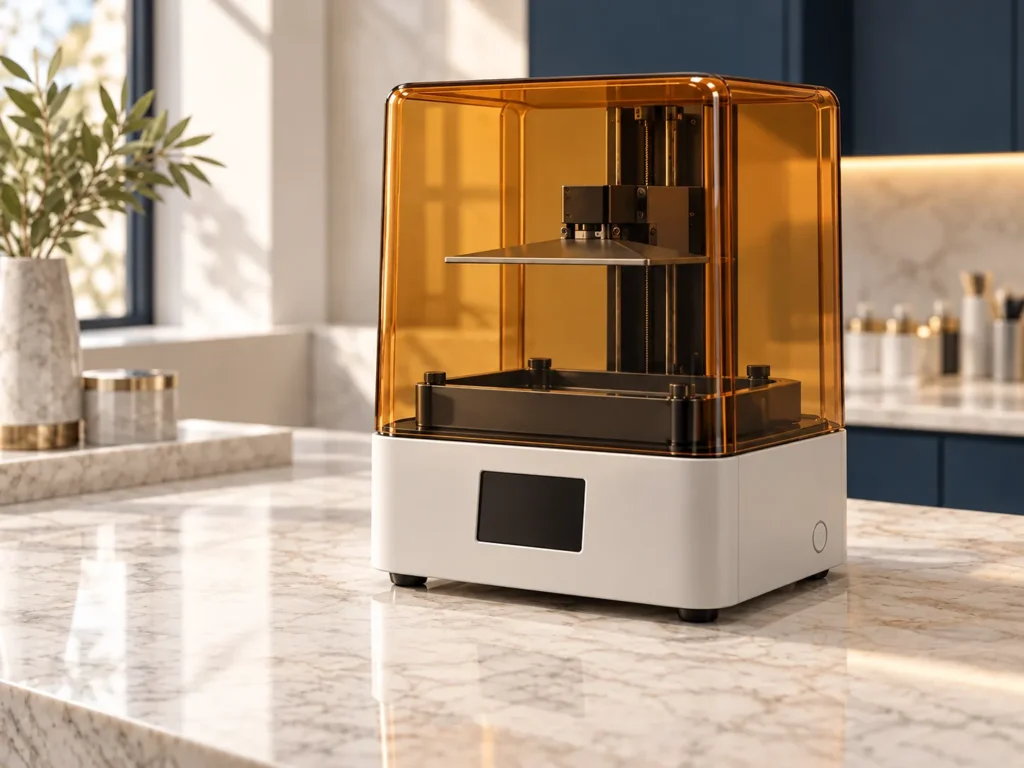
3D printing

Turning digital designs into physical models, prototypes and applicable dental restorations.

A physical model or prototype can make a digital plan easier to assess and refine. Our 3D printing workflow supports selected stages of design and fabrication, connecting the screen to an object the team can work with.

What can be printed depends on the intended use and the material selected. Some restorations use other manufacturing methods; your plan will explain how your final teeth will be made.

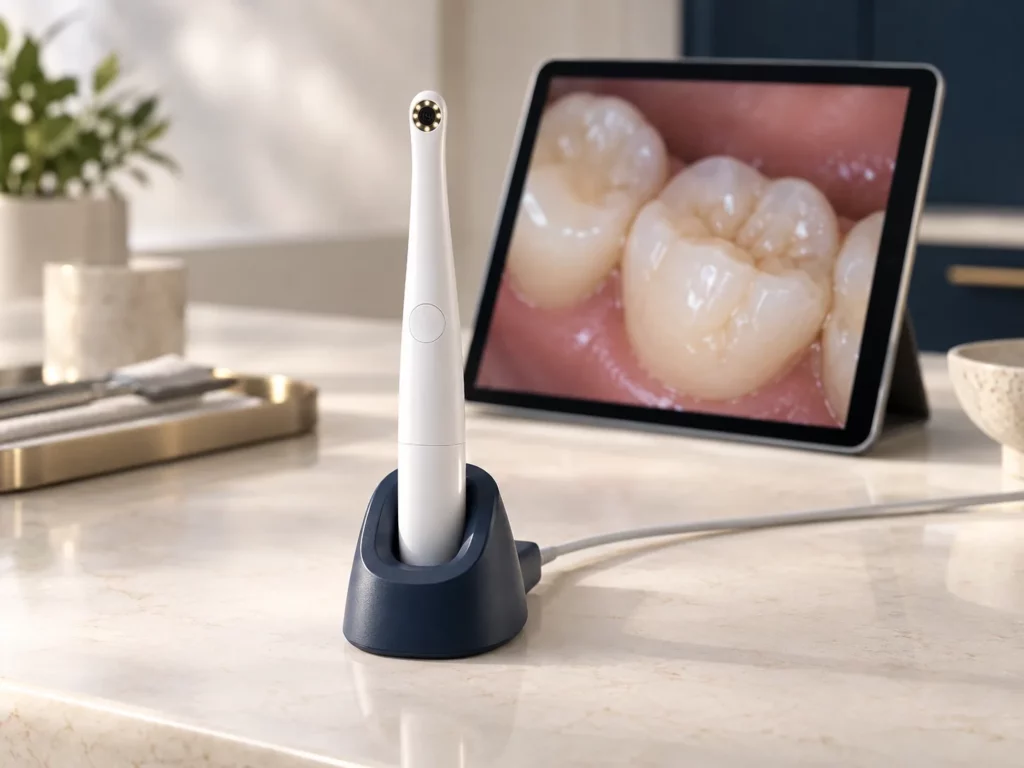
Illustration of a slim intraoral camera with a dental image on a screen.

Intraoral cameras

A closer view of your teeth and gums, so you can see the details being discussed.

A small camera captures photographs inside the mouth. Showing those images on a screen lets you and your dentist look at a specific area together during your assessment.

This visual record can help explain a finding or a proposed treatment. Surface photographs complement the examination; they do not replace X-rays or other tests when those are needed.

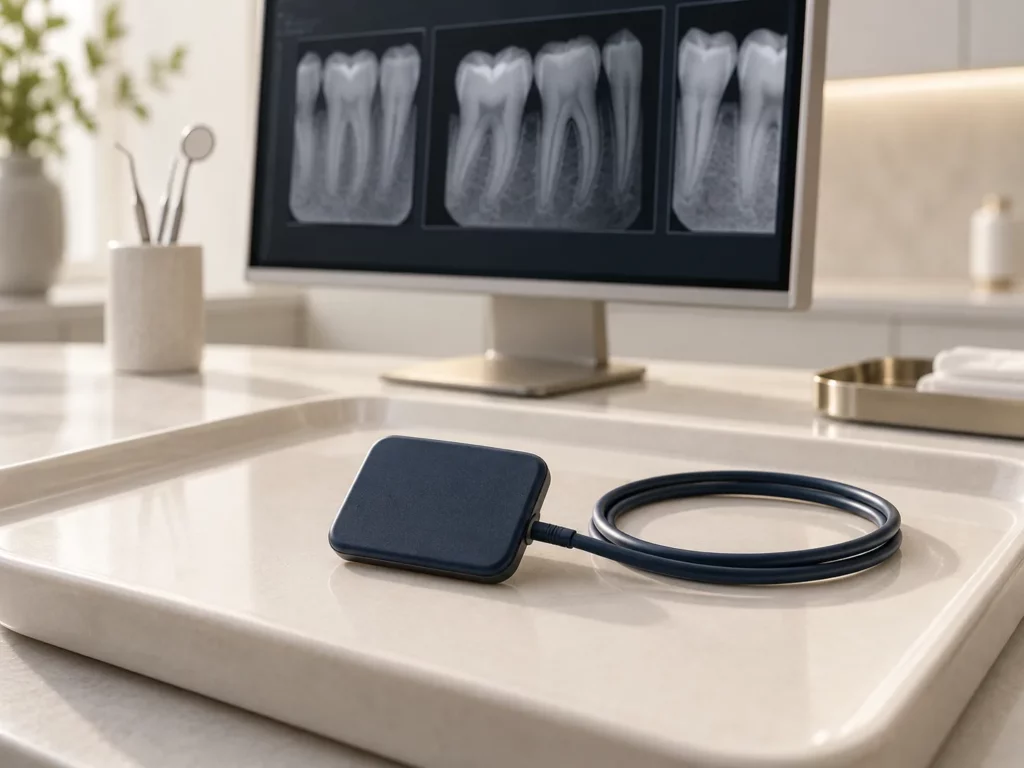
Illustration of a digital dental X-ray sensor beside an imaging screen.

Digital X-rays

Diagnostic images that help your dentist assess areas a surface examination cannot show.

Digital sensors capture X-ray images for review on a screen. When indicated, these images help the dentist assess teeth and supporting structures as part of diagnosis and treatment planning.

The type and timing of imaging follow your clinical needs and the information already available. Digital X-rays use ionizing radiation; they are different from optical impressions and ordinary photographs.

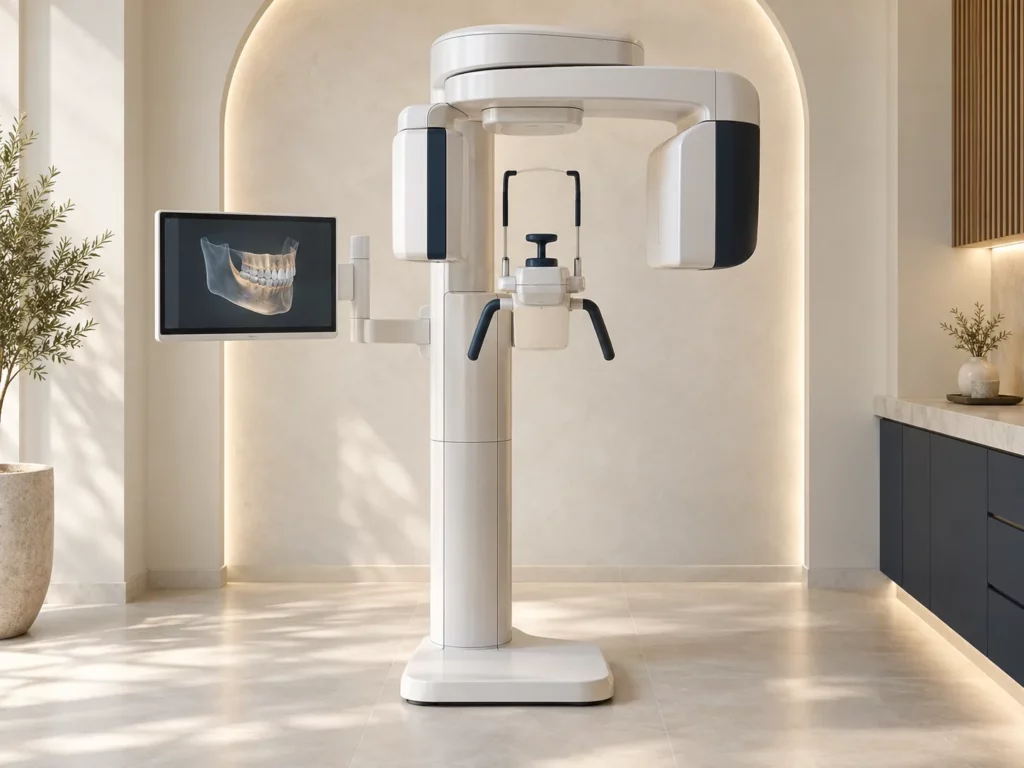
Illustration of a cone-beam dental imaging scanner.

CBCT / 3D imaging

A three-dimensional view for selected cases, including assessment and planning for dental implants.

Cone beam computed tomography, or CBCT, creates three-dimensional X-ray images. In implant planning, it can help the dentist assess bone and the relationship of nearby anatomical structures.

A CBCT scan is used when the additional information is clinically needed. It is not a routine step for every cosmetic treatment or every rehabilitation plan.

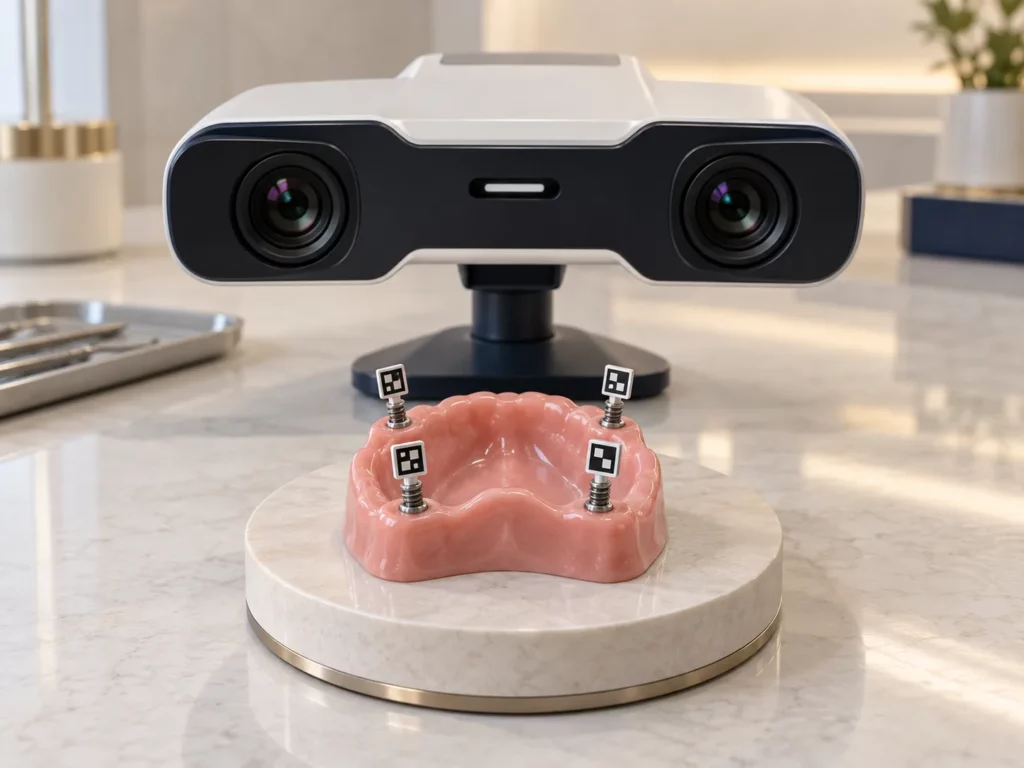
Illustration of a dental photogrammetry camera and implant-position markers on a model.

Photogrammetry

Recording implant positions for selected restorations supported by multiple dental implants.

Dental photogrammetry records the relative positions and orientations of implants using special markers and a camera system. This information supports the digital design of a restoration that connects to those implants.

Its role is specific to suitable implant cases, including full-arch restoration. It is different from a scan of natural teeth and is not a standard step for veneers or every full-mouth rehabilitation.

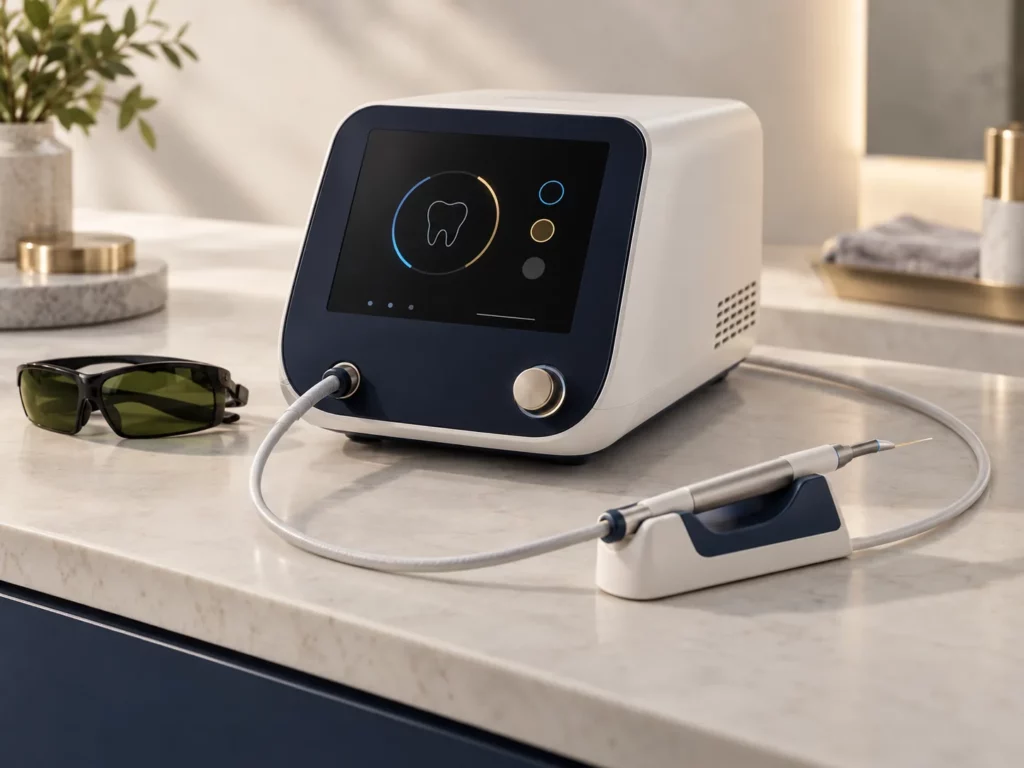
Illustration of a dental soft-tissue laser console and fine-tipped handpiece.

Soft-tissue laser

A tool for selected soft-tissue procedures when your dentist finds it appropriate.

A dental soft-tissue laser can be used for particular procedures involving the gums or other soft tissues. Your dentist will explain the purpose of any proposed laser treatment and how it fits your care.

Laser use is separate from routine cleaning, scaling and root planing, or full-mouth debridement. A gum-care assessment determines which treatment is needed; a laser is not part of every deep cleaning.

A clearer picture of your care.

A few questions about how technology fits your treatment.

Will I need every technology shown here?

No. Your dentist selects the tools needed for your assessment and treatment. The related services show possible applications, not a checklist of equipment that every patient will need.

Is a digital impression the same as an X-ray?

No. An intraoral scanner uses optical images to record surface shapes. Digital X-rays and CBCT use ionizing radiation to provide different information about teeth and supporting structures.

Does digital technology mean treatment is completed in one visit?

Not necessarily. The number of visits depends on the treatment, materials, healing and clinical checks involved. Your dentist will explain the expected stages.

Can we discuss the appearance of my proposed restorations?

Yes. Tell the team about your preferences for shape, shade and overall appearance. Your dentist can explain which previews, models or try-ins are appropriate for the proposed treatment.

Let's talk about your smile.

Share what you would like to change. We will help you understand the options and the technology that may support your care.