In this guide
When you are researching a missing tooth, it is easy to compare treatment names before understanding the plan behind them. Start by asking how each option would be supported and what the complete process would involve.
How does each option work?
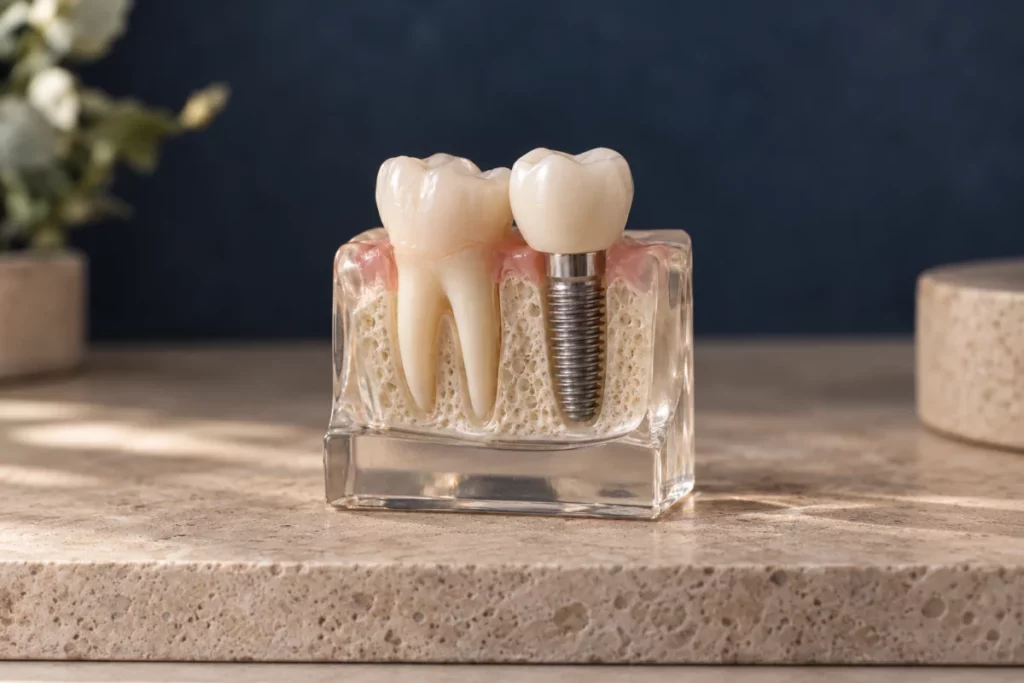
A dental implant is placed surgically in the jaw and supports a restoration, such as a crown. A traditional fixed bridge replaces a missing tooth with an artificial tooth supported by the teeth beside the gap. A bridge can also be supported by implants.
What needs to be assessed?
Discuss your health history and the condition of neighboring teeth with your dentist. Implant planning involves assessing the supporting bone and healing considerations. Bridge planning involves assessing its proposed supports. The available choices follow that assessment, not a preference for one treatment name.
What should the plan explain?
- The scope: which teeth are involved and what preparatory care is proposed.
- The sequence: the expected stages and how the gap is managed between them.
- The estimate: what is included and which items may be billed separately.
- The follow-up: cleaning, monitoring, and maintenance to discuss for the chosen restoration.
Implant treatment includes a healing period; the sequence and timing vary. Ask the team to explain the proposed schedule for you rather than relying on another person’s treatment story.
How can you take the next step?
Write down what matters most to you: understanding the procedure, daily care, appointment planning, or the full cost. You can explore dental implants and dental bridges at All On Smiles before your consultation in King of Prussia.
Bring the same questions to each discussion. Comparing written plans side by side is more useful than comparing a single headline price.
A little more clarity
Common questions
Can a bridge be supported by implants?
Yes. Bridges may be supported by natural teeth or by implants. Ask which design your dentist is proposing and why it suits the gap being restored.
Is an implant always the better choice?
There is no single answer for every mouth. Health, available support, adjacent teeth, preferences, and treatment planning all need to be considered.
Can I compare the costs without an exam?
General prices may omit important parts of a treatment plan. Ask for an individualized written estimate that identifies the proposed work, separate stages, and any additional care.
Sources & further reading
General educational information; your dentist can advise on your individual needs.
Explore your options